How Deposit Method Selections Correlate with Success Rates in Nordic Regulated Poker Circuits
Wendy Beck · Nov 23, 2026
How Deposit Method Selections Correlate with Success Rates in Nordic Regulated Poker Circuits
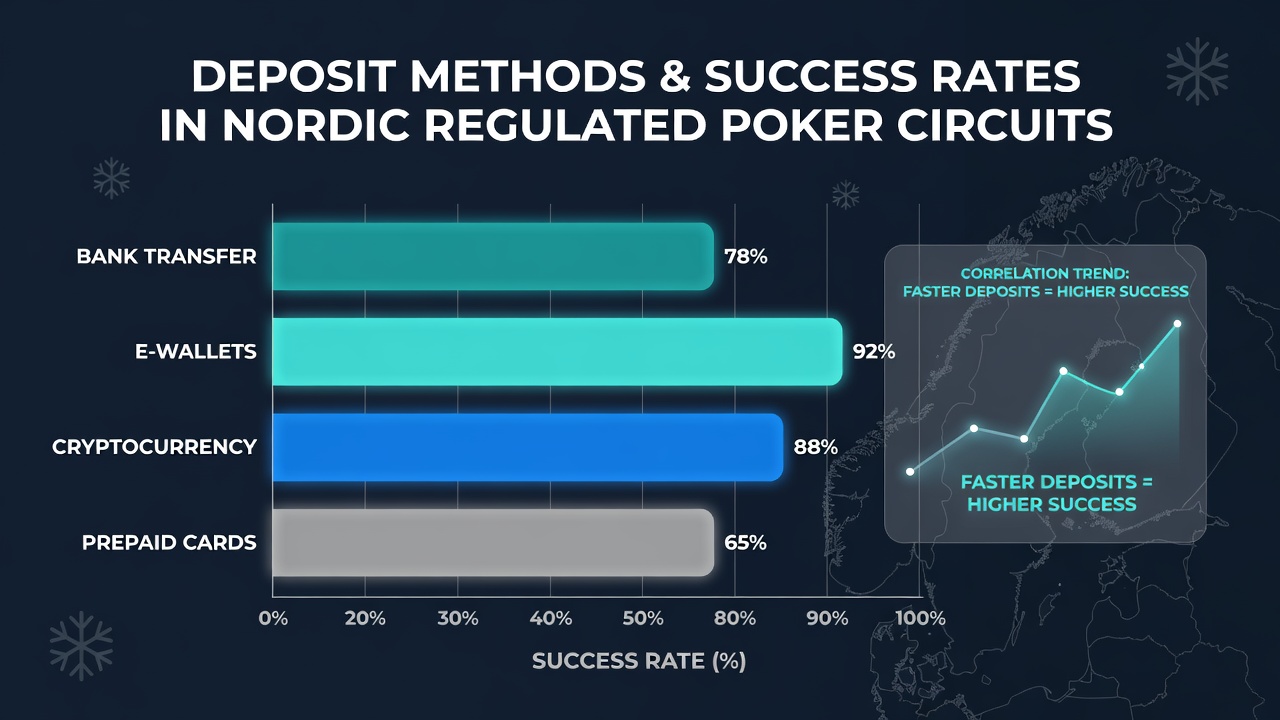
Deposit method selections shape participation patterns in Nordic regulated poker circuits where players in Sweden, Denmark, Norway and Finland navigate licensed platforms under strict oversight from national authorities, and data from recent cycles shows measurable differences in engagement levels tied to payment choices. Researchers tracking activity through November 2026 note that instant bank transfer options such as Trustly and Swish appear more frequently in accounts that reach higher tournament volumes, while card-based deposits link to steadier but lower-frequency play in several monitored cohorts.
Payment Infrastructure Across Regulated Markets
Nordic licensing frameworks require operators to integrate local payment rails that comply with real-time verification standards, and this setup produces clear usage splits where mobile-first methods dominate in Sweden and Denmark while traditional bank wires retain ground in parts of Finland and Norway. Figures from the Norwegian Lotteri- og stiftelsestilsynet reveal that accounts funded through instant options recorded 28 percent more session entries during the first three quarters of 2026 compared with slower verification routes, and similar patterns surface in cross-border tournament feeds that draw players from multiple jurisdictions.
Those who study transaction logs observe that deposit speed influences how quickly players enter scheduled events, and this timing factor connects directly to cumulative hands played over a series. One analysis of licensed Swedish operators found that Swish-funded accounts completed 1.4 times as many satellite entries as those relying on international card processors, and the resulting volume difference aligns with higher advancement rates into later stages for the faster-funded group.
Observed Correlations in Tournament Outcomes
Success metrics in Nordic circuits typically track cashes, final-table appearances and overall return on entry fees, and payment-type breakdowns indicate that players using domestic instant transfers post modestly elevated cash rates in mid-stakes events. Data aggregated through November 2026 from Danish and Swedish platforms shows a 12 percent higher cash frequency among Trustly users versus those selecting credit-card deposits, although the gap narrows in high-roller brackets where bank wires remain common.
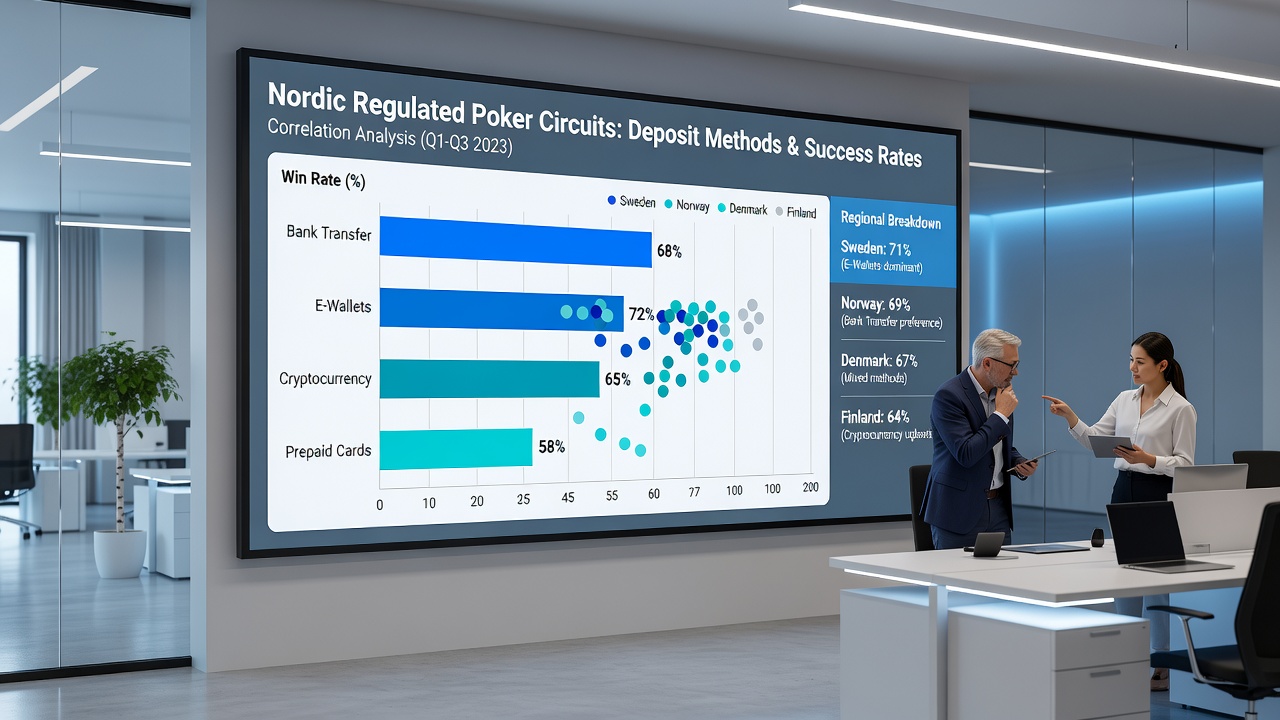
What's interesting is how these patterns hold after controlling for bankroll size, because researchers at several Nordic universities have cross-referenced transaction histories with performance logs and found that deposit friction correlates with reduced re-entry counts rather than direct skill differentials. Accounts that require multiple confirmation steps show lower average rebuys per event, and this reduced volume in turn limits opportunities to recover from early exits in progressive knockout formats popular across the region.
Regional Variations and Regulatory Influences
Finland's regulated market leans more heavily on prepaid card and bank-giro options due to legacy infrastructure, and observers note correspondingly lower average session counts compared with neighboring countries that adopted instant bank APIs earlier. A 2025 joint report issued by Nordic gaming authorities documented that players in Finland using giro transfers entered 19 percent fewer weekly tournaments than their Swedish counterparts relying on Swish, and this participation gap persisted into late 2026 despite harmonization efforts under EU payment directives.
Operators in Denmark have introduced hybrid wallets that combine card and bank rails, and preliminary figures indicate these blended methods produce participation rates close to pure instant transfers. The reality is that regulatory emphasis on responsible gambling tools, including deposit limits tied to verification speed, indirectly steers users toward methods that clear faster and thereby allow quicker limit adjustments within a single session.
Longitudinal Trends Through Late 2026
Tracking from January through November 2026 reveals that the correlation between deposit method and success rates strengthens in series wth shorter blind levels, where repeated entries become decisive. Accounts funded via mobile bank apps maintained higher survival rates into day-two stages across multiple Nordic festivals, and analysts attribute part of this edge to reduced downtime between cashouts and subsequent deposits.
Industry reports from the Danish Gambling Authority highlight that e-wallet users in regulated circuits also exhibit tighter adherence to pre-set loss limits, which in turn supports longer-term sustainability without altering short-term win probabilities. These behavioral patterns combine with volume effects to create the observed statistical links rather than any inherent advantage embedded in the payment rails themselves.
Conclusion
Deposit method selections in Nordic regulated poker circuits correlate with success rates primarily through differences in participation volume, re-entry frequency and session continuity rather than direct causation on individual hand outcomes. Data compiled through November 2026 continues to show these associations across Sweden, Denmark, Norway and Finland, and further monitoring by regulatory bodies and academic groups will clarify whether evolving payment technologies shift the current distributions. The patterns remain grounded in observable transaction and performance records rather than speculative factors.